Learn TypeDB by example: enterprise access schema model
A hands-on TypeDB course. Build the schema for an RBAC system using TypeQL and TypeDB Studio.

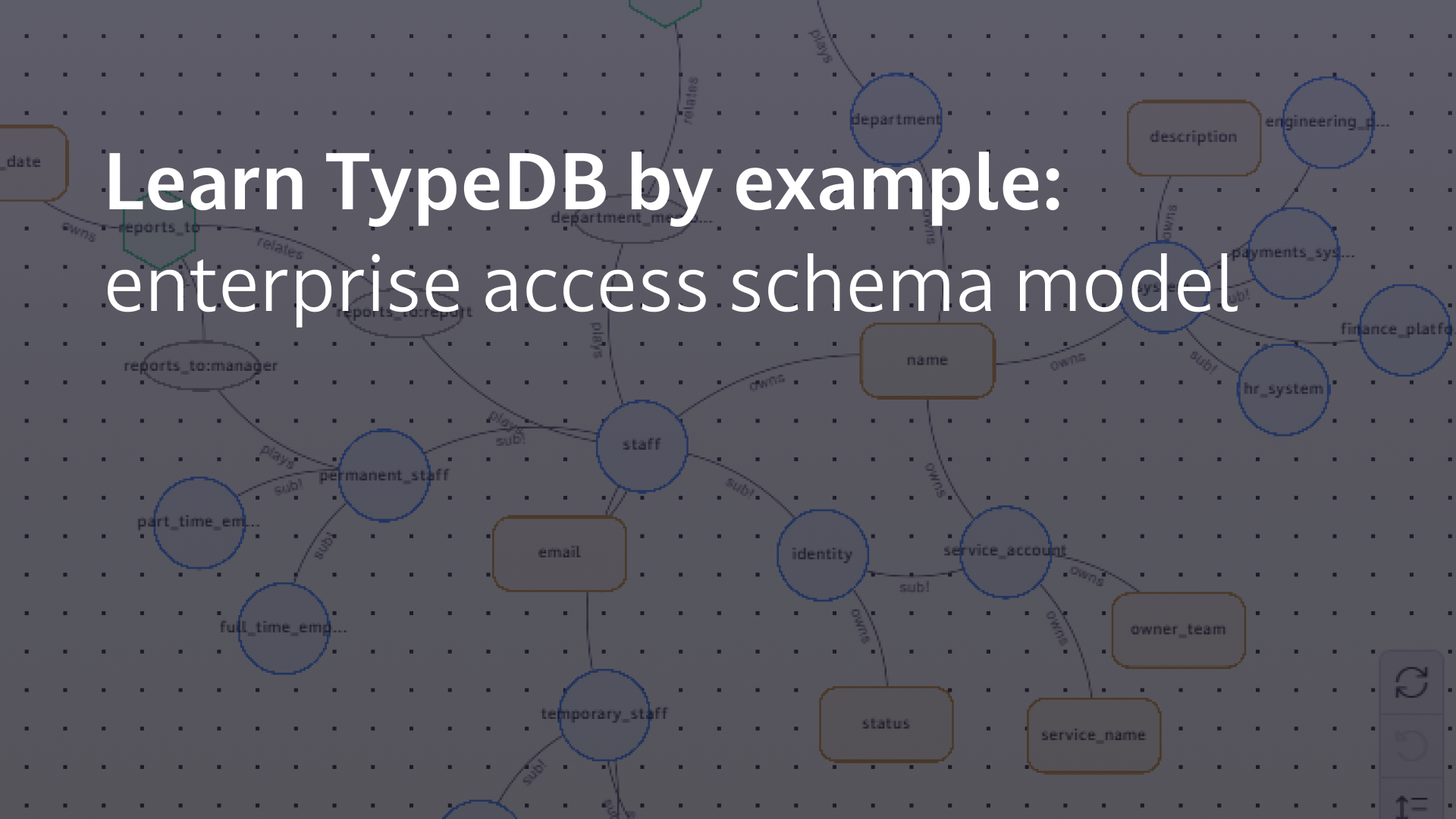
We have released a new course that teaches TypeDB through building the seed of an enterprise RBAC system. By the end of the course, you should have built a working knowledge of our language and mode of modelling, while also having developed a schema that can be tuned to a full access control pilot system.
We also chose this domain because it showcases a number of the features that differentiate TypeDB from traditional graphs, while demonstrating our new way of modelling data. Though still graph-based, TypeDB is somewhat different from traditional graph.

In simple terms, LPG (labelled property graphs like Neo4j) uses largely schema-less nodes and binary edges. These allow for rapid prototyping and data traversal, but can have difficulty with scale and complexity.
The TypeDB model is an n-ary hypergraph, with a strongly typed schema. These two fundamental concepts make it uniquely powerful for scaled and/or complex systems.
Over the course of eleven chapters, you will develop the whole schema model, inserting a number of identities and hypothetical company tools which would require access control.
There are three core objectives for what we would like the reader to learn through the journey
- How to develop a schema with TypeDB
- Learning the fundamentals of the TypeQL language and functions
- Core principles of data modelling
This course was architected with the support of enterprise TypeDB customers who are working on a similar domain for their own organisations.
If you’re evaluating TypeDB for your own stack and want to take this further, into something closer to what your organisation actually needs, reach out to us, and we’ll explore with you to see if TypeDB is a fit for your business needs.